Today there was a procession of the Blessed Sacrament in connection with Corpus Christi Sunday, at my little home parish of St. Thomas Aquinas, accompanied by:
Josquin des Prez, Missa Pange Lingua
sung by the St. Ann Choir.

In 1867, Matthew Arnold wrote "Dover Beach", a haunting poem evoking the "melancholy, long, withdrawing roar" of the Sea of Faith. As a boomer who finished Catholic elementary school in 1964 and then watched my Church falter, I've found the roar all too audible. So here I wait, listening for the whispers of that Sea's invincible return.
Sunday, June 18, 2006
Sunday, June 11, 2006
Lies > opinion > substance
Darn, that Francis Bacon just keeps on delivering up good ones!
And that insight explains why, for example, we have to continue to debunk Dan Brown, even though his book is claptrap, no one with any sense will believe it, etc., etc. We have to continue because the lies are out there -- powerfully out there -- and they are already breeding opinion. If that opinion brings on substance, watch out.
And in these and the like kinds, it often falls out, that something is produced of nothing; for lies are sufficient to breed opinion, and opinion brings on substance.
And that insight explains why, for example, we have to continue to debunk Dan Brown, even though his book is claptrap, no one with any sense will believe it, etc., etc. We have to continue because the lies are out there -- powerfully out there -- and they are already breeding opinion. If that opinion brings on substance, watch out.


Not alone
It's nice to know one's not alone in certain sentiments, so I was encouraged to run across this, from Sir Francis Bacon:
A man's nature runs either to herbs or weeds: therefore let him seasonably water the one, and destroy the other.
Trinity Sunday at St. Thomas
From the St. Ann Choir at St. Thomas Aquinas today:
Josquin d'Ascano, In Te, Domine, Speravi
Antoine de Fevin, Sancta Trinitas
Josquin d'Ascano, In Te, Domine, Speravi
Antoine de Fevin, Sancta Trinitas
Wednesday, June 07, 2006
Womenpriests right down the street
Given what a wacky place the Bay Area is, I guess I shouldn't have been surprised that we're home to yet another wackiness: women declaring that they are now priests of the Roman Catholic Church. And only a convenient 20-minute drive from my front door!
To say the least, I'm not too impressed with the response of the diocese. Here's the entire acknowledgement of the situation from the current issue of the diocesan newspaper:
That's it. Note that although this has been going on for some time, it's "recent news reports" that led the diocese to do something, finally. And there's to be no punishment for anyone -- no excommunication of the "priestesses", no warning of grave sin attaching to attendance at these "celebrations of the sacraments". And what a wishy-washy way of putting the reason for not attending: the bogus masses are "not in union with the local or universal church." Come to think of it, why was it necessary to mention the "local" church at all?
At least they put "Roman Catholic Woman Priest" in quotes.
According to a May 28 story in the San Jose Mercury News, the diocesan spokeswoman, Roberta Ward, believes that
How many times have we seen that attitude before. Let's not say anything about the evil in our midst. It's small now. Maybe it'll just go away. Subtext: think of how inconvenient and uncomfortable it might become to actually stand up for our Faith.
The diocese's grand strategy has been to try to avoid giving the group publicity. And what happens? The Mercury News, circulation 300,000+, runs a fawning 1,200 word front-page story with three attractive photos, a full schedule of when and where you can attend these false masses, and the group's website.
Well, that idea sure worked great.
To say the least, I'm not too impressed with the response of the diocese. Here's the entire acknowledgement of the situation from the current issue of the diocesan newspaper:
Recent news reports of “Roman Catholic Woman Priest” Victoria Rue leading celebrations of the Mass on the campus of San Jose State University require the Diocese of San Jose to issue the following statement: Victoria Rue is not a validly ordained priest of the Roman Catholic Church. Members of the Roman Catholic Church should not participate in celebrations of the sacraments that are conducted by Victoria Rue, as those celebrations are not in union with the local or universal Church.
That's it. Note that although this has been going on for some time, it's "recent news reports" that led the diocese to do something, finally. And there's to be no punishment for anyone -- no excommunication of the "priestesses", no warning of grave sin attaching to attendance at these "celebrations of the sacraments". And what a wishy-washy way of putting the reason for not attending: the bogus masses are "not in union with the local or universal church." Come to think of it, why was it necessary to mention the "local" church at all?
At least they put "Roman Catholic Woman Priest" in quotes.
According to a May 28 story in the San Jose Mercury News, the diocesan spokeswoman, Roberta Ward, believes that
most of the services are so small... there's no point in drawing attention to them.
How many times have we seen that attitude before. Let's not say anything about the evil in our midst. It's small now. Maybe it'll just go away. Subtext: think of how inconvenient and uncomfortable it might become to actually stand up for our Faith.
The diocese's grand strategy has been to try to avoid giving the group publicity. And what happens? The Mercury News, circulation 300,000+, runs a fawning 1,200 word front-page story with three attractive photos, a full schedule of when and where you can attend these false masses, and the group's website.
Well, that idea sure worked great.
Monday, June 05, 2006
This Sunday at St. Thomas
Since this Sunday was Pentecost, the St. Ann Choir performed a full Renaissance mass, Missa Osculetur Me by Orlando de Lassus, along with the Gregorian sequence Veni, Sancte Spiritus.
No Rainbow sashers, thank God.
There was one little girl making her First Communion, very charming in her white dress and veil, the only one of her group of 170 in this three-church parish to learn all the required prayers in Latin! And so she wanted to have her First Communion at St. Thomas, where Latin is used and honored.
There's hope!
No Rainbow sashers, thank God.
There was one little girl making her First Communion, very charming in her white dress and veil, the only one of her group of 170 in this three-church parish to learn all the required prayers in Latin! And so she wanted to have her First Communion at St. Thomas, where Latin is used and honored.
There's hope!
Sunday, June 04, 2006
Weed 'n' feed
A friend once explained to me why his (non-denominational) pastor didn't talk much about sin and evil: one should just talk about the "good news" of the Gospels, not the "bad news" of evil, lest one become fascinated, even fixated, on the latter.
Quite aside from the danger of making a kind of "happy talk" Christianity, it just isn't honest to ignore evil. To do so gives an incomplete picture of the world, and begs the question of what we needed to be saved from in the first place. There is good in the world, and there is evil. Deal with both.
Anyone who has ever successfully tended a garden knows about celebrating Good while confronting Evil. How's that? Well, what happens if you just plant nice flowers in your garden, but never pull any weeds? The weeds take over. What happens if you weed like mad but never plant any flowers? You get a barren patch of ground. But if you both weed and plant, then you get a garden.
Quite aside from the danger of making a kind of "happy talk" Christianity, it just isn't honest to ignore evil. To do so gives an incomplete picture of the world, and begs the question of what we needed to be saved from in the first place. There is good in the world, and there is evil. Deal with both.
Anyone who has ever successfully tended a garden knows about celebrating Good while confronting Evil. How's that? Well, what happens if you just plant nice flowers in your garden, but never pull any weeds? The weeds take over. What happens if you weed like mad but never plant any flowers? You get a barren patch of ground. But if you both weed and plant, then you get a garden.
Not all that is high is holy
From Thomas á Kempis, The Imitation of Christ
I do not desire consolation that robs me of contrition, nor do I care for contemplation that leads to pride, for not all that is high is holy, nor is all that is sweet good, nor every desire pure, nor all that is dear to us pleasing to God.
I do not desire consolation that robs me of contrition, nor do I care for contemplation that leads to pride, for not all that is high is holy, nor is all that is sweet good, nor every desire pure, nor all that is dear to us pleasing to God.
Monday, May 29, 2006
Something else to remember today

Today is Memorial Day, and we're rightly remembering the many who have given their lives for our country.
But there are others whom we should be recalling on this May 29: the thousands who died on the walls of Constantinople, 553 years ago on this day, in hopeless defense of their city and their faith against Muslim conquest.
Muslim armies had first tried to storm Constantinople over 800 years earlier, and over the centuries since then, had steadily torn away piece after piece of the Byzantine Empire. The pressure was sometimes greater, sometimes less, but the Religion of Peace never gave up its dream of bringing the great Christian empire to its infidel knees. It knew what it wanted, and it was willing to wait.
By the time Mehmet II brought his Ottoman siege guns up to the walls in spring 1453, everyone knew that even a successful defense could only delay Constantinople's capture by a few years. Too much of the empire had been lost. There weren't enough men, and there wasn't enough money.
But that didn't keep the last emperor, Constantine XI, from doing what he could.
The heroic and tragic story of the siege, and its aftermath for Greek Christians, is well-told in Steven Runciman's The Fall of Constantinople 1453, so if you want to know more about this largely-neglected moment in history, that's a good place to start.
When the walls were breached at last,
Theophilus [another Byzantine leader] shouted that he would rather die than live, and disappeared into the oncoming hordes. Constantine himself knew now that the Empire was lost, and he had no wish to survive it. He flung off his imperial insignia and, with Don Francisco and John Dalmata still at his side, he followed Theophilus. He was never seen again.
If you have a moment, say a prayer for the souls of Constantine and the others who died that day. In their own way, they also gave their lives for us, trying to hold at bay the same threat that looms today. They too deserve to be remembered.
Sunday, May 28, 2006
This Sunday at St. Thomas
Sung by the St. Ann Choir here today:
Jacobus Gallus, Ascendens Christus in Altum
William Byrd, Psallite Domino
Jacobus Gallus, Ascendens Christus in Altum
William Byrd, Psallite Domino
Saturday, May 27, 2006
St. Thomas at St. Thomas
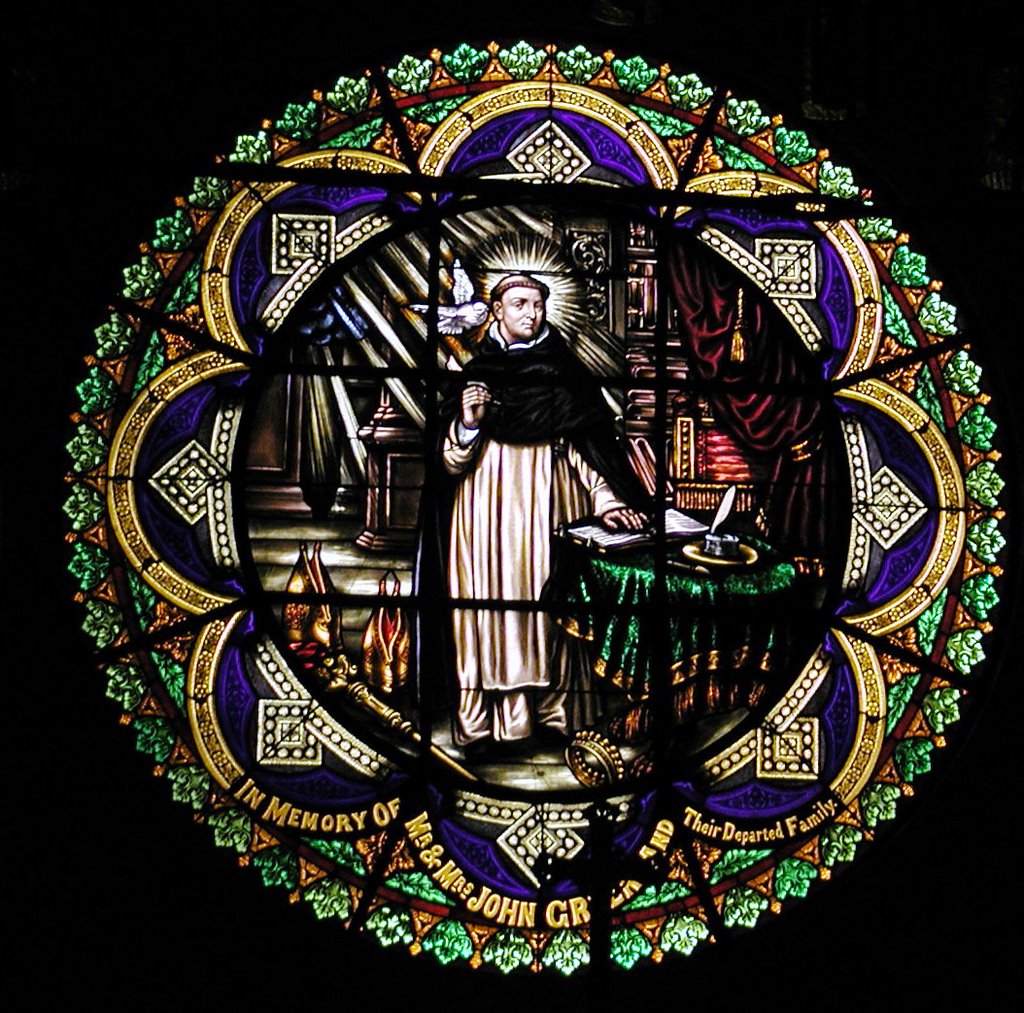
This is the window over the altar at St. Thomas Aquinas, my parish church. Of course, it depicts the man himself!
Thursday, May 25, 2006
The High and the Mighty
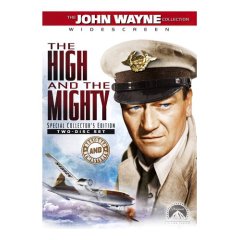
I happened to catch the 1954 John Wayne movie The High and the Mighty on TV last night. I was intrigued by the portrayal of Catholics in it, especially compared with the current attitudes coming out of Hollywood.
It was the first of the airline disaster films, and there's a long period in which the fate of the airliner and its passengers is in question (at least, as much as it could be with JW on board).
One of the passengers, a poor Italian fisherman from San Francisco, pulls out his rosary and begins to pray, first silently, then quietly aloud; when his seatmate asks him exasperatedly, "Do you have to do that?" he just answers, "Yeah." Later, he greets his family at the gate: six kids, if I recall. He's the only passenger who prays.
And again, as they pass over a ship at sea, the ship's radio operator, who has been helping track them, steps outside to the railing, makes the sign of the cross, and bows his head.
Very positive portrayals of common people with faith. I wish we had more today -- the portrayals, and the people.
One other thing: in the climactic moments, there's a beautiful shot from above, with the plane silhouetted as it flies down the centerline of the approach lights. Along that centerline, a short distance from the runway, there's a transverse bar of lights -- making a cross. I don't think that was accidental.
Three gardens
Was reading a short but wonderful article by a Prof. Rodney Delasanta, called Gardens of Good and Evil, in the May 2005 issue of First Things. (I know, it's May 2006 now, but I'll never catch up with my First Things reading). He looks at the archetypical story of the first Garden -- Eden -- and how the garden's loss has been dealt with.
The Christian view is that Eden, given to us by God, was lost by us through our refusal to live by its rules.
The Enlightenment and modernism, by way of throwing all that old stuff out, gave us Voltaire's maxim in Candide that "we must cultivate our own [man-made] garden." But this, says Delasanta, is "the garden of resignation, of suffering unfulfilled, the garden of disenchantment." Working in this garden is our necessary distraction from the pain of the long slow spiral to death and defeat. It can take your mind off the despair, but nothing more.
Postmodernists have worked out the final implications of Voltaire's vision in literature like Jose Luis Borges' The Garden of Forking Paths, a maze whose lanes lead nowhere and have no meaning. Wandering in that garden serves to pass the time, but you don't have a choice, really, they say. And everything's relative, so don't worry, be happy -- or despair and die, it's all the same.
No, thanks.
Back to the Christian vision.
Our defeat in the first Garden leads downhill to a second Garden, Gethsemane, where a man waits in anguish to sacrifice himself. Here the human race reaches a nadir; of all the human beings who surround Christ that night, one betrays him, others abandon and deny him, and the rest haul him off to be murdered. The Enemy has triumphed, it seems. He has set the stage for the ultimate sacrilege: mankind will murder God's Son. Game over.
Three days later, into a third Garden, Mary Magdalene comes early. But the tomb there is empty, the body gone. Panicked, she looks around, and sees a man; thinking he is the gardener, she begs him to tell her what happened. But he gives no explanation; he simply speaks her name. And she knows him, and knowing him, knows what has happened: the shame of the First Garden and the disaster of the Second have been redeemed utterly by the sacrifice that has just triumphed in the Third.
Thinking he is the gardener... But He is.
I'll take that vision over the other anytime.
The Christian view is that Eden, given to us by God, was lost by us through our refusal to live by its rules.
The Enlightenment and modernism, by way of throwing all that old stuff out, gave us Voltaire's maxim in Candide that "we must cultivate our own [man-made] garden." But this, says Delasanta, is "the garden of resignation, of suffering unfulfilled, the garden of disenchantment." Working in this garden is our necessary distraction from the pain of the long slow spiral to death and defeat. It can take your mind off the despair, but nothing more.
Postmodernists have worked out the final implications of Voltaire's vision in literature like Jose Luis Borges' The Garden of Forking Paths, a maze whose lanes lead nowhere and have no meaning. Wandering in that garden serves to pass the time, but you don't have a choice, really, they say. And everything's relative, so don't worry, be happy -- or despair and die, it's all the same.
No, thanks.
Back to the Christian vision.
Our defeat in the first Garden leads downhill to a second Garden, Gethsemane, where a man waits in anguish to sacrifice himself. Here the human race reaches a nadir; of all the human beings who surround Christ that night, one betrays him, others abandon and deny him, and the rest haul him off to be murdered. The Enemy has triumphed, it seems. He has set the stage for the ultimate sacrilege: mankind will murder God's Son. Game over.
Three days later, into a third Garden, Mary Magdalene comes early. But the tomb there is empty, the body gone. Panicked, she looks around, and sees a man; thinking he is the gardener, she begs him to tell her what happened. But he gives no explanation; he simply speaks her name. And she knows him, and knowing him, knows what has happened: the shame of the First Garden and the disaster of the Second have been redeemed utterly by the sacrifice that has just triumphed in the Third.
Thinking he is the gardener... But He is.
I'll take that vision over the other anytime.
Wednesday, May 24, 2006
Stained glass: preserving the faith till better times
 One of the great things about stained glass in older churches is that it often preserves an expression of orthodox faith even when the people who now use the building are, well, no longer so orthodox.
This beautiful example, from a church I won't name, carries the motto "Thou art the Christ, the Son of God."
The Episcopalian congregation of this church is, I gather, one of the more "progressive" in California. Which is saying quite a lot. But no matter what moral and theological errors may be preached from the pulpit for a few passing years, this window will still be there, silently insisting through its beauty on the most important Truth of all.
I like that thought.
A new way to provide Da Vinci commentary?
By now, we've probably all watched a DVD that offered, as one of its extended features, running commentary by the actors or director of the movie. Pretty standard.
Yesterday, I got to thinking: what if you could distribute alternative commentary that would play right along with the DVD, perhaps pausing the playback if necessary to let lengthy commentary be heard before going on to the next scene? Wouldn't that be a great service to provide when the DVD of The Da Vinci Code comes out?
Instead of having to watch the movie first, then read a commentary and try to relate it to their recollection of the film, viewers would get the commentary in real time, while the movie was playing (you might have to mute or lower the audio playback from the DVD to let the commentary be heard). Seemed to me that it could be a far more effective way of commenting on a work in which the lies come thick and fast.
Now, here comes a weird coincidence. Today, I was delivering some photos to Stanford Law School, which hires me now and then to shoot their events. My oh-so-brilliant idea of the day before was nowhere on my mind. But being addicted to reading whatever catches my eye, I stopped at a bulletin board outside the office of one of the law profs. And while I was idly skimming a couple of newspaper articles about a copyright case he'd been involved in a couple of years back, I stopped dead at one particular paragraph and said to myself, "Hey! Wait a minute! That's my idea!"
As the article revealed, the concept of marketing supplemental commentary (the article mentioned Roger Ebert as an example) is at least a couple of years old. But it got swept up into a lawsuit from (surprise!) Hollywood, aimed at companies that were marketing versions of movies that had the profanity and smut edited out of them. Those versions were meant to make it possible for families to enjoy popular films without exposing the kids to the full gamut of Tinseltown's depravity.
The directors and studios couldn't object to actual copyright infringement, since no new copy of the material was being made; instead, they were up in arms over the possibility that their artistic integrity (cough, cough) would be compromised if everyone wasn't forced to hear every single f*** and s*** they had gratuitously sprinkled into their scripts, every single time one of their masterworks was seen.
The lawsuit appears to have been enough to kill off some small companies that were trying to get started offering the alternative editions. Others, such as Utah-based ClearPlay, pursuing a different and more sophisticated model, held on.
Then last year, Congress intervened with the Family Entertainment and Copyright Act. (At the Thomas link, scroll down to Title II). Altering the viewing experience of a legitimately-bought copy of a movie became legal, as long as "no fixed copy" of the work was made.
Now, it seems to me that supplemental commentary, synchronized to the playback of a DVD, would easily be covered by the Act. After all, the commentary would be original material, and the original work wouldn't be altered at all. It would be no more a copyright infringement than the common practice of watching a sports event on TV, turning down the volume, and listening to the play-by-play on your favorite radio station.
Ideally, a running Da Vinci Code commentary would be done by some of the prominent experts who have already weighed in with print, audio, and video rebuttals of the book. But if they don't, darn it, I'll do it myself.
Yesterday, I got to thinking: what if you could distribute alternative commentary that would play right along with the DVD, perhaps pausing the playback if necessary to let lengthy commentary be heard before going on to the next scene? Wouldn't that be a great service to provide when the DVD of The Da Vinci Code comes out?
Instead of having to watch the movie first, then read a commentary and try to relate it to their recollection of the film, viewers would get the commentary in real time, while the movie was playing (you might have to mute or lower the audio playback from the DVD to let the commentary be heard). Seemed to me that it could be a far more effective way of commenting on a work in which the lies come thick and fast.
Now, here comes a weird coincidence. Today, I was delivering some photos to Stanford Law School, which hires me now and then to shoot their events. My oh-so-brilliant idea of the day before was nowhere on my mind. But being addicted to reading whatever catches my eye, I stopped at a bulletin board outside the office of one of the law profs. And while I was idly skimming a couple of newspaper articles about a copyright case he'd been involved in a couple of years back, I stopped dead at one particular paragraph and said to myself, "Hey! Wait a minute! That's my idea!"
As the article revealed, the concept of marketing supplemental commentary (the article mentioned Roger Ebert as an example) is at least a couple of years old. But it got swept up into a lawsuit from (surprise!) Hollywood, aimed at companies that were marketing versions of movies that had the profanity and smut edited out of them. Those versions were meant to make it possible for families to enjoy popular films without exposing the kids to the full gamut of Tinseltown's depravity.
The directors and studios couldn't object to actual copyright infringement, since no new copy of the material was being made; instead, they were up in arms over the possibility that their artistic integrity (cough, cough) would be compromised if everyone wasn't forced to hear every single f*** and s*** they had gratuitously sprinkled into their scripts, every single time one of their masterworks was seen.
The lawsuit appears to have been enough to kill off some small companies that were trying to get started offering the alternative editions. Others, such as Utah-based ClearPlay, pursuing a different and more sophisticated model, held on.
Then last year, Congress intervened with the Family Entertainment and Copyright Act. (At the Thomas link, scroll down to Title II). Altering the viewing experience of a legitimately-bought copy of a movie became legal, as long as "no fixed copy" of the work was made.
Now, it seems to me that supplemental commentary, synchronized to the playback of a DVD, would easily be covered by the Act. After all, the commentary would be original material, and the original work wouldn't be altered at all. It would be no more a copyright infringement than the common practice of watching a sports event on TV, turning down the volume, and listening to the play-by-play on your favorite radio station.
Ideally, a running Da Vinci Code commentary would be done by some of the prominent experts who have already weighed in with print, audio, and video rebuttals of the book. But if they don't, darn it, I'll do it myself.
Tuesday, May 23, 2006
In for the long haul
The other day, I was listening to a talk about The Da Vinci Code by Fr. Euteneuer of Human Life International. It's good, though a bit over the top at times. It's aimed at committed Catholics who are already convinced of the perversity of radical feminism and the Culture of Death. It won't appeal to many non-Christians.
But it wasn't his comments about DVC that made me sit up. He recalls, at one point, how the Church has faced similar threats from the popular press in the recent past: A Course in Miracles in the 70's, The Celestine Prophecy in the 90's, and so on.
I stopped right there. Yes, those books came out back then -- and they're still on bookshelves everywhere, continuing to deceive and mislead. And where is the Church's response to their lies? Out of print. Scattered here and there on the Web. No longer available.
Oh, the Church may have responded with some vigor when these books were new. But as the buzz died down, so did the Church's countermeasures. And today, those books still sit quietly on home bookshelves, waiting to entice new generations; they show up at used book sales, and get donated to libraries; they're for sale at Amazon. But the opposition -- the truth -- sleeps.
The Church has kept no thorough, devastating responses ready and waiting. The attitude seems to have been: just ignore the books, and they'll go away. Don't draw attention to them. Let them slide slowly toward oblivion.
Fine, as far as it goes. Which is not far enough. Their slide toward oblivion make take decades or centuries, and while they're sliding, they're dragging a lot of souls with them. We can't follow Christ and just let those souls go without a fight.
We need a way to keep the defenses fresh and available -- not just for a few weeks or months while a new pack of lies is on the Times' bestseller list, but for decades to come. Once error is in print, it becomes a permanent enemy, and needs a permanent defense. And we need to do it in a way that doesn't burn out the few who step onto the front lines in the first weeks of battle.
Web, print, and DVD: those are the weapons for the new defenses.
I remember the words of a youth hymn we sang back at my Catholic elementary school in the early 60's:
But it wasn't his comments about DVC that made me sit up. He recalls, at one point, how the Church has faced similar threats from the popular press in the recent past: A Course in Miracles in the 70's, The Celestine Prophecy in the 90's, and so on.
I stopped right there. Yes, those books came out back then -- and they're still on bookshelves everywhere, continuing to deceive and mislead. And where is the Church's response to their lies? Out of print. Scattered here and there on the Web. No longer available.
Oh, the Church may have responded with some vigor when these books were new. But as the buzz died down, so did the Church's countermeasures. And today, those books still sit quietly on home bookshelves, waiting to entice new generations; they show up at used book sales, and get donated to libraries; they're for sale at Amazon. But the opposition -- the truth -- sleeps.
The Church has kept no thorough, devastating responses ready and waiting. The attitude seems to have been: just ignore the books, and they'll go away. Don't draw attention to them. Let them slide slowly toward oblivion.
Fine, as far as it goes. Which is not far enough. Their slide toward oblivion make take decades or centuries, and while they're sliding, they're dragging a lot of souls with them. We can't follow Christ and just let those souls go without a fight.
We need a way to keep the defenses fresh and available -- not just for a few weeks or months while a new pack of lies is on the Times' bestseller list, but for decades to come. Once error is in print, it becomes a permanent enemy, and needs a permanent defense. And we need to do it in a way that doesn't burn out the few who step onto the front lines in the first weeks of battle.
Web, print, and DVD: those are the weapons for the new defenses.
I remember the words of a youth hymn we sang back at my Catholic elementary school in the early 60's:
On earth's battlefield, ne'er a vantage we'll yield...I'm tired of the long defeat. Anyone else?
Monday, May 22, 2006
Way too soon to relax
The usually ferocious William Donohue of The Catholic League went to see DVC, and had this to say at the end of his dismissive review:
I'm not at all convinced. I can well imagine that the movie failed to persuade Bill, since he has taken the trouble to educate himself tirelessly on early Church history, Gnosticism, and the other topics DVC muddies up. But have most practicing Catholics innoculated themselves and their families to a similar degree? I really, really doubt it. It's way too early to relax about DVC, even about its effect on Catholics who attend Mass weekly and do the other things 'practicing' Catholics do.
Yes, critical reaction was largely negative, and reaction of moviegoers in Italy was mixed, but that doesn't mean that the movie can't still deceive. The film grossed $70 million on its opening weekend. It will be seen by hundreds of millions of people before the last DVD spins, decades from now. Few of them will see it with their minds and souls properly equipped with the truth. Many will think it's at least a plausible version of history. And great damage will be done.
This is no time for any of us to breathe a sigh of relief at the movie's imperfections and think "Oh, good, nothing to worry about after all."
Had the movie been a success, the effect would have been troubling. But because it fails to persuade, this is one movie practicing Christians have nothing to worry about.
I'm not at all convinced. I can well imagine that the movie failed to persuade Bill, since he has taken the trouble to educate himself tirelessly on early Church history, Gnosticism, and the other topics DVC muddies up. But have most practicing Catholics innoculated themselves and their families to a similar degree? I really, really doubt it. It's way too early to relax about DVC, even about its effect on Catholics who attend Mass weekly and do the other things 'practicing' Catholics do.
Yes, critical reaction was largely negative, and reaction of moviegoers in Italy was mixed, but that doesn't mean that the movie can't still deceive. The film grossed $70 million on its opening weekend. It will be seen by hundreds of millions of people before the last DVD spins, decades from now. Few of them will see it with their minds and souls properly equipped with the truth. Many will think it's at least a plausible version of history. And great damage will be done.
This is no time for any of us to breathe a sigh of relief at the movie's imperfections and think "Oh, good, nothing to worry about after all."
The will to unbelief
From a letter from J.R.R. Tolkien to his son Michael, 1963:
From the same letter -- written, remember, in '63, just before Vatican II got into gear -- this prescient observation:
The 'reform' he refers to is not made fully clear in the text, but the editor of the collection of letters notes that, given the context, it was probably Pius X's exhortation to receive the Eucharist daily.
'Surpassing anything ... that the Council will achieve'? How right he was!
It takes a fantastic will to unbelief to suppose that Jesus never really 'happened', and more to suppose that he did not say the things recorded of him -- so incapable of being 'invented' by anyone in the world at that time: such as 'before Abraham came to be I am' (John viii). 'He that hath seen me hath seen the Father' (John ix); or the promulgation of the Blessed Sacrament in John v: 'He that eateth my flesh and drinketh my blood hath eternal life'. We must therefore either believe in Him and in what he said and take the consequences; or reject him and take the consequences.
From the same letter -- written, remember, in '63, just before Vatican II got into gear -- this prescient observation:
I suppose the greatest reform of our time was that carried out by St Pius X: surpassing anything, however needed, that the Council will achieve.
The 'reform' he refers to is not made fully clear in the text, but the editor of the collection of letters notes that, given the context, it was probably Pius X's exhortation to receive the Eucharist daily.
'Surpassing anything ... that the Council will achieve'? How right he was!
Sunday, May 21, 2006
At last, some good da Vinci TV
After shaking my head over the shabby me-too-and-it's-all-true "documentaries" about The daVinci Code on the History Channel and A&E, I was delighted to see something of value on, of all places, the Sci Fi Channel. Good production values, good people, and most importantly, the right attitude. Actually, it's got plenty of attitude.
Called Cracking Da Vinci's Code, it aired May 18, the day before the movie opened, and features such luminaries as the inimitable Amy Welborn; Scott Wenig, Assoc. Prof of Applied Theology at Denver Seminary; Chuck Missler, author of How We Got Our Bible; Jim Garlow, co-author of the book Cracking Da Vinci's Code; Darrell Bock, author of Breaking the da Vinci Code; Erwin Lutzer, author of The da Vinci Deception; Steve Kellmeyer, author of Fact and Fiction in The Da Vinci Code; Sandra Miesel and Carl Olson, authors of The da Vinci Hoax; and Paul Meier, Prof. of Ancient History at Western Michigan University.
Together, they do a fine job of taking Dan Brown's book down hard, exposing the major lies and misrepresentations in authoritative fashion.
Also appearing is an interesting scoundrel named Lewis Perdue, author of The da Vinci Legacy and Daughter of God, two books he penned a decade or more before DVC. Parts of the DVC bear, shall we say, a very, very close resemblance to passages in his books. But of course, Dan Brown says he never read them or heard of them. Never. Nope.
There's also a visit to Rosslyn Chapel, where DVC says a huge Star of David is carved in the floor. A tour guide even pulls up the carpet. No star.
The DVD appears to be available at ShopNetDaily. There, it's confusingly titled Breaking the da Vinci Code, and is billed as an edited version of another production, The da Vinci Code Deception. Amazon has it, too, without the reference to the longer version. Odd. Beware a similarly-titled DVD, Cracking the da Vinci Code; this is different.
Me, I'd rather read the books this production is based on. But a whole lot of people don't read anything serious, so I'm glad this show is out there. I guess things haven't changed much, come to think of it, since Boss Tweed complained about Thomas Nast's political cartoons of him: "I know my constituents can't read. But dammit, they can see pictures!"
Called Cracking Da Vinci's Code, it aired May 18, the day before the movie opened, and features such luminaries as the inimitable Amy Welborn; Scott Wenig, Assoc. Prof of Applied Theology at Denver Seminary; Chuck Missler, author of How We Got Our Bible; Jim Garlow, co-author of the book Cracking Da Vinci's Code; Darrell Bock, author of Breaking the da Vinci Code; Erwin Lutzer, author of The da Vinci Deception; Steve Kellmeyer, author of Fact and Fiction in The Da Vinci Code; Sandra Miesel and Carl Olson, authors of The da Vinci Hoax; and Paul Meier, Prof. of Ancient History at Western Michigan University.
Together, they do a fine job of taking Dan Brown's book down hard, exposing the major lies and misrepresentations in authoritative fashion.
Also appearing is an interesting scoundrel named Lewis Perdue, author of The da Vinci Legacy and Daughter of God, two books he penned a decade or more before DVC. Parts of the DVC bear, shall we say, a very, very close resemblance to passages in his books. But of course, Dan Brown says he never read them or heard of them. Never. Nope.
There's also a visit to Rosslyn Chapel, where DVC says a huge Star of David is carved in the floor. A tour guide even pulls up the carpet. No star.
The DVD appears to be available at ShopNetDaily. There, it's confusingly titled Breaking the da Vinci Code, and is billed as an edited version of another production, The da Vinci Code Deception. Amazon has it, too, without the reference to the longer version. Odd. Beware a similarly-titled DVD, Cracking the da Vinci Code; this is different.
Me, I'd rather read the books this production is based on. But a whole lot of people don't read anything serious, so I'm glad this show is out there. I guess things haven't changed much, come to think of it, since Boss Tweed complained about Thomas Nast's political cartoons of him: "I know my constituents can't read. But dammit, they can see pictures!"
This Sunday at St. Thomas
Sung this Sunday at the noon Mass at St. Thomas Aquinas, Palo Alto:
Josquin des Prez, Christe Fili Dei
Hans Leo Hassler, Christe Qui Lux Es et Dies
Josquin des Prez, Christe Fili Dei
Hans Leo Hassler, Christe Qui Lux Es et Dies
Subscribe to:
Posts (Atom)